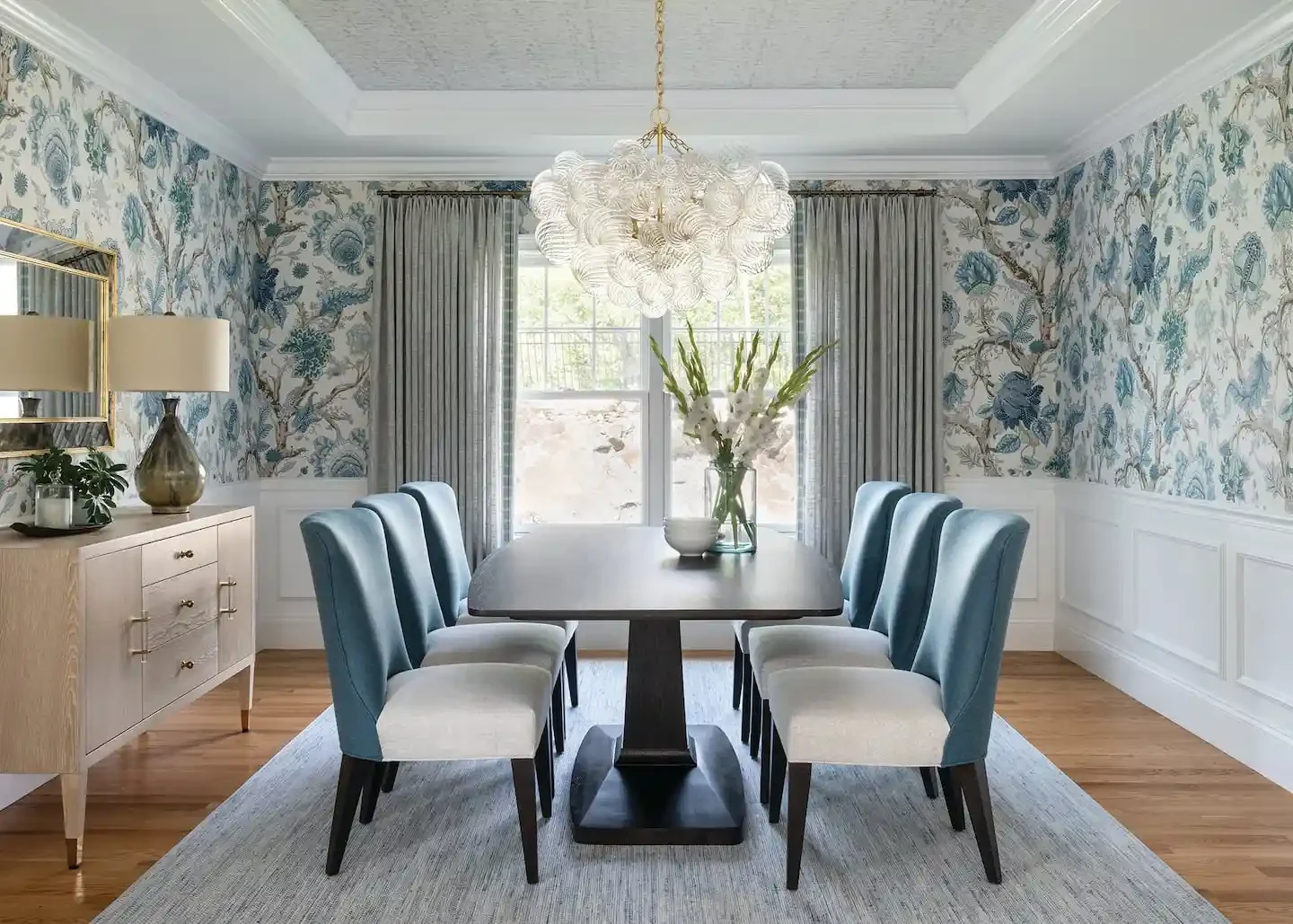
Start with the wall, then narrow the pattern.
Wallpaper is part of the room’s composition. Light, adjoining paint, furniture and trim all affect how its color and scale read.
1. Notice the light
North- or south-facing light, window size and artificial lighting can shift how a color appears. If possible, compare a sample in the room at different times of day.
2. Think about scale
A small repeat can create a quiet texture; a large motif may become a focal point. On an accent wall, consider what sits nearby and where the pattern will stop at corners, trim and openings.
3. Read the product instructions
Check what the product says about its backing, adhesive, surface, cleaning and pattern match. Different materials can call for different preparation and handling.
4. Look at the surface underneath
Texture, old paste, repairs and paint condition can influence the finished look and what preparation is needed. Peel-and-stick products also have surface limitations; confirm them in the manufacturer’s guide.
5. Decide what happens at the edges
Think about inside and outside corners, window returns, doors and the transition to painted wall. Those boundaries influence how a repeat is laid out.
Still weighing options? You can call and talk about the room even if you have not selected a product.